post
PJW Meters Four Point Caravan Hookup
Four Point Caravan Hookup
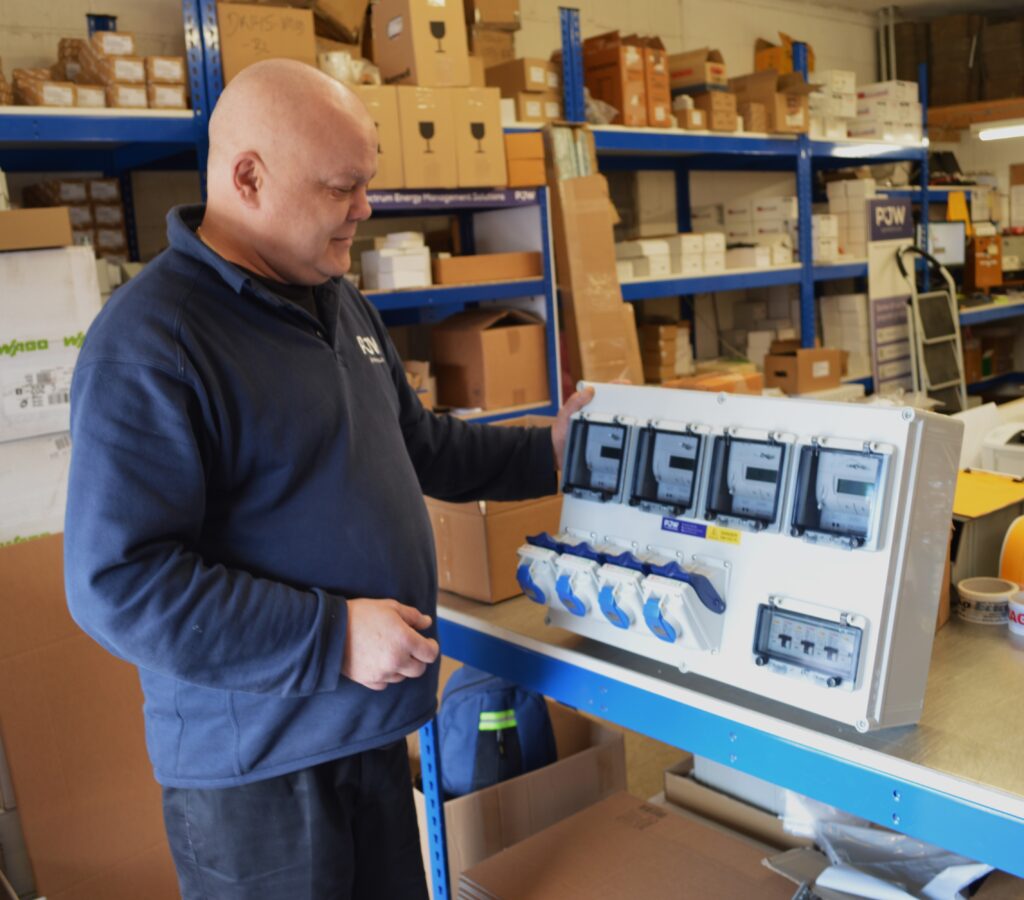
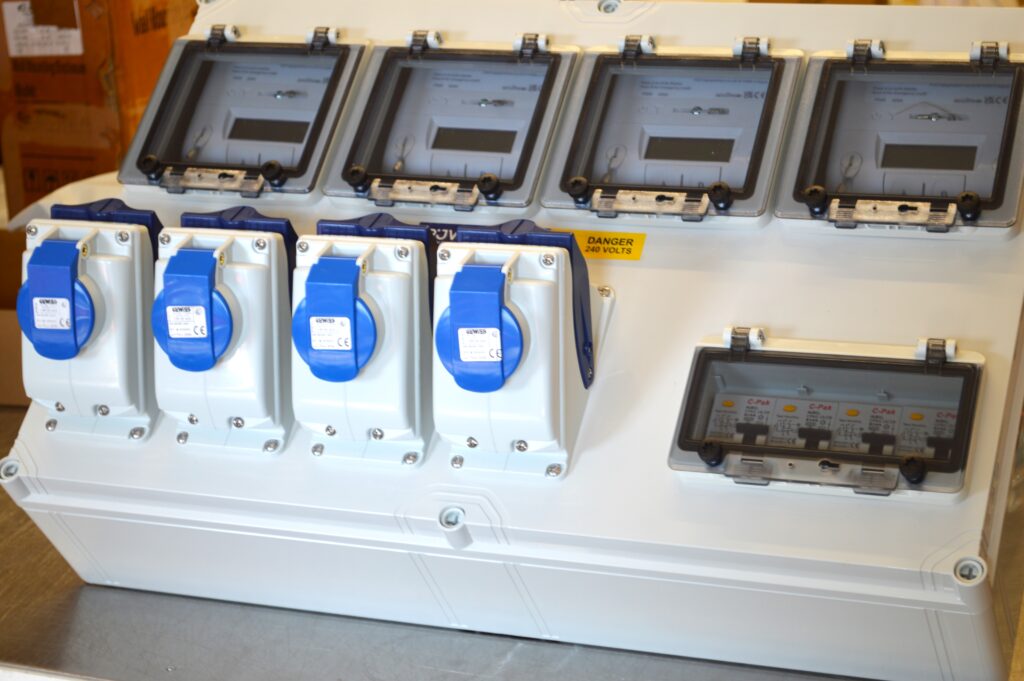
UK’s First PAYG Four Point Wall Mounted Caravan Hookup
At PJW Meters, we are always looking to innovate and improve on existing designs, and to anticipate, meet and exceed customers requirements.
Our in house Workshop manager Andy, cannot resist a challenge to get hands on with a complex panel build where one is needed, especially service pedestal units. Our Four point wall mounted Caravan Hookups are ready to ship to your Caravan site, just in time for the summer tourist season!
Compton Park Camping & Caravan Site – Testimonial for PJW Meters
PJW Utility Meters for Compton Park Camping & Caravan Site

Thank you for a great review from the the Picturesque Compton Park Camping and Caravan Site. We upgraded the site’s unmetered and unmonitored energy system, to bring convenience and ease of use to guests and hosts alike.
“ As the costs of energy rose we had no detailed breakdown of our visitors usage. PJW Meters provided an exact pre-paid Metering solution with Hook-ups and Pedestal upgrades. This has transformed our energy provision giving us an accurate and convenient means of monitoring precise pitch energy consumption.
I would have no hesitation in recommending PJW Meters to other Caravan camping sites” Jamie – Director.
If you are planning a holiday in Cornwall, definitely book a visit here:
Compton Park Camping & Caravan Site
If you need Caravan metering solutions, definitely visit us !
Energy Metering Solutions for Parkers Farm in Ashburton

Energy Metering Solutions for Parkers Farm in Ashburton
Last Thursday we had the pleasure of meeting local legend Paul Parkers and his delightful daughter Holly. They invited us into Parks Farm, a homestead with moorland views, which had once been a holiday park. Parkers Farm is now a breathtakingly scenic estate of homes for permanent residents.
Having provided and installed 50 plus utility meters for Parkers Farm, we wanted to know how they were getting on with these, and what sort of a difference these may have made for the residents living there.
Paul said that they had been using a manual paper card system in the past, and that residents and guests would come to their office/home when they needed to top up their gas and electric. This meant that cash needed to be kept in the house, and although they did request that people come to top up during office sort of hours, this was not always the case. On top of this, people being as they are, often took the opportunity to stop and have a good old chat. While this was mostly ok, sometimes it was not convenient.
The new EML-TU smart meters which we installed for Parkers Farm, allowed residents and tenants to top up their own meters. They downloaded the app, and paid with a credit card. It allows users to pay when they want, from wherever they are, to accurately monitor their energy use, and even change their their provider or tariffs as required.
Noting the the difference it made, Paul said ‘It transformed our system completely, it literally gave me my life back’. No more large amounts of cash in the house, and no more guests knocking on the door at all hours, it is a win for everyone involved.
Parkers Farm no longer operates as a holiday park, however they still have several caravans available for sale.
If you want to buy a caravan, contact Parkers Farm. If you want meters for your commercial or residential premises, contact us.
Details below
Home Charging Station for Electric Vehicles
Should I buy an Electrical Vehicle ?
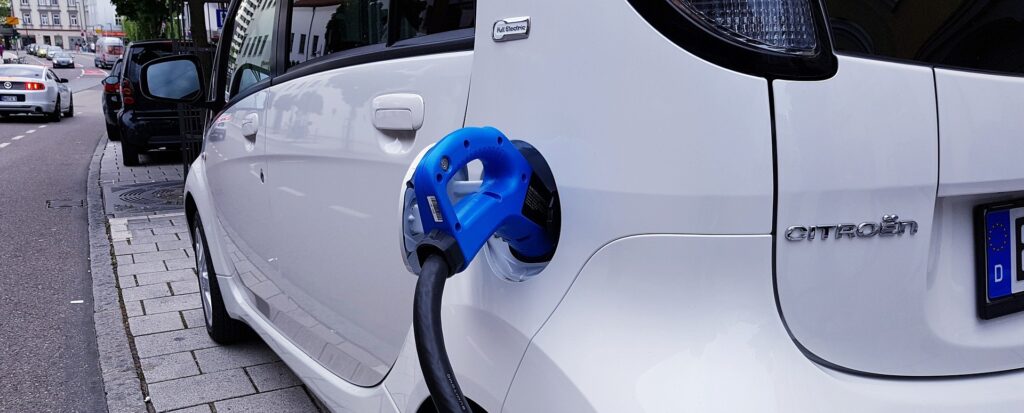
(Yes but consider installing a Home Charging Station for maximum benefits)
Electric vehicles (EVs) sales are very much on the increase in the UK, and rising petrol prices along with proposed plans to abolish new petrol and diesel vehicles by 2030, are driving the demand.
Before you head to the dealer, here is a look at the market from the perspective of everyday car buyers, with pros and cons of buying an electric vehicle today.
Electric cars, should you buy in 2023, wait, or buy at all ?
We are in the dawning of the electric car era, but in many ways this era is still in its infancy. Relatively, the percentage of all new vehicles sold featuring battery electric technology is still quite small, and we trail many North European countries by a wide margin. Despite this, car manufacturers are introducing new EVs at a blistering pace.
Increasing variety of types of vehicles
The variety of EV vehicles model available in the UK is growing. This includes larger vehicles such as pick up trucks and SUVs. Electric compact cars continue to be the best value for most every day users.
Electric cars have great performance.
Electric vehicles offer excellent acceleration, moving away from stoplights with formidable verve. the most powerful of these can rival petrol powered super cars. According to Tesla, the Tesla Model S Plaid has zero to 60 mph time of just 1.99 seconds. EV vehicles are built with their battery mounted below the cabin, and this low centre of gravity makes for great handling.
Where petrol engines take some time to build up to peak power, EVs produce their peak power the moment you step on the accelerator.
Owning an EV vehicles is not only about saving the environment, they are also fun, zippy, and handle really well.
The Performance Comes with a high initial price
The initial purchase of an Electric Vehicle is still high, although prices are declining from one year to the next.
On his website, Martin Lewis states that currently, manufacturer’s list price on a new Vauxhall Corsa for example, is £17,000, and £31,000 for the EV version of the same car, a Mini £23,000 vs £32,550 for an EV, and a Volvo XC40 £35,800 vs £46,500 for an EV. Prices are lower again when buying second hand cars.
Some studies are expecting prices of electric cars and internal combustion engines to equalise due to further expected drops in battery prices, and this is even without government subsidies such as the environmental bonus.
Research from LV, one of the largest car insurers found that most Electric Cars are cheaper on average than petrol or diesel vehicles over a 7 year period, when considering purchase price, tax, insurance, fuel, and maintenance costs.
Incentives for EV Drivers
As an EV owner, you are completely exempt from paying car tax, or vehicle excise duty, but this in only until April 2025. For plug in Hybrids, it is likely you will pay some car tax, but this will be less than for petrol or diesel vehicles. Hybrids are also liable to pay ‘expensive car tax’, check with Government car tax calculator to find out more about this.
Insurance costs for EVs have come down, as they become more popular. And are now comparable with insurance for petrol or diesel cars. This does depend on the driver, car, and type of insurance you want.
Some UK cities such as London, Birmingham and Bristol operate Low Emissions or Clean Air Zones, or will soon introduce these. This is to help reduce emissions in, and also to encourage people to choose modes of transport which are less harmful to the environment. Both EVs and Hybrids are exempt from Low emission charges in these cities.
These incentives may put money back into your pocket when deciding on buying an EV vehicle.
Electric vehicle charging infrastructure.
At present, there are an estimated 24,000 charging locations across the UK, and this number is increasing. Many public car parks; supermarkets, public and retail parking lots, car dealerships, hotels and B&Bs offer charging points. Downloadable apps can help you find locations of these.
Most charging points are found in urban areas however, and you may struggle to find them in more suburban and rural areas of the country. This lack of infrastructure leaves drivers with few options if one point is out of service.
In addition, fast charging stations are not always located in safe areas. Charging may only take 30 minutes or so, but the driver still needs to get out of the car to unplug the charger, and this may be a worry in shady urban areas or at night.
As with anything, public charge points are not always reliable, they may not work on the day, your app might glitch and not want to connect, or not offer sufficient charging speed for various reasons.
Home charging stations
Buying a home charging station is a good investment, and it is much easier and cheaper if you can charge your vehicle at home. You can simply plug the charging station’s cable into your vehicle charge port and charge your EV from empty to full through the night, when charging costs are the lowest.
In many places, tax and utility incentives can pay for much of a charging stations cost.
The benefits of not having to go to petrol stations, queues, handling dirty nozzles, are great, all while saving money on petrol prices, and keeping the planet green.
The mileage range of electric cars is improving.
The earlier EVs only have a range of around one hundred miles on a single charge, but most sold today can go much farther between charges. 200-300 miles on a charge in more common with newer vehicles. This depends on factors such as the weather, both very hot and very cold weather will affect the battery life and range of the vehicle.
Some luxury EVS may have a range of 520 miles on full charge, so it does depend on the vehicle. Furthermore, range estimates will increase with continued improvements in battery technology, and the increase in production and variety of EVs.
The vast majority of UK drivers use their cars for round-trip commutes which are far shorter than the range of most EV vehicles in the marketplace. This is true even with second hand EVs, with severely depleted battery capacity.
With the advantages of a home charging station, you can charge your vehicle overnight and take advantage of your utility’s cheaper time-of-use rates. This can potentially save you a significant amount of money and help to offset the costs of purchasing and driving electric vehicles.
We offer a range of Charging Stations for you to purchase, you can view our range here
What is voltage optimisation ?
What is voltage optimisation ?

You wouldn’t use a blowtorch to light a candle, and the same logic applies to overvoltage issues in your home or commercial buildings.
Overvoltage in the UK is a problem. Your home or commercial building currently receives more voltage than is necessary. This excess supply of power causes higher energy bills for you, and potential damage to your electrical equipment. What is overvoltage, and what is voltage optimisation when deployed as a countermeasure?
Overvoltage what is it and what can you do about it?
The amount of current in a circuit depends on the voltage supplied. In the UK, the declared low voltage electricity supply as per the ‘Electrical Safety, Quality and Continuity Regulations 2002’ is 230V+/- 10%. This is (230Volts give or take 10%). Theoretically, the range of voltage coming into your home is 216V – 253V. This allows the use of older electrical equipment which had been designed for higher voltages pre-2002. It also allows the efficient use of equipment and electronics built more recently.
Fluctuations and consistent overvoltage in the supply from the National Grid, when used with newer equipment can waste unnecessary energy. The result is higher energy bills and possibly the reduction of the lifespan of your electrical equipment.
The economic and environmental impact of overvoltage
The impact of overvoltage means that consumers using even a small amount of electricity in excess to what they need pay up to 10-13 % more for their electricity. This adds up over time, resulting in wasted resources and higher bills.
Nationwide, this culminates in an even greater amount of energy wasted, money spent unnecessarily, and the enormously high carbon emissions which we emit every single year.
The cheapest and greenest energy is the energy you don’t use; the most savings you will make is on the money that you don’t have to spend.
What is voltage optimisation and how is it deployed as a countermeasure?
The function of Voltage Optimisation technology is to selectively adjust and regulate the power supply coming from the grid. It works to systematically regulate and reduce the amounts of voltage received by the energy consumer, and better match the power voltage that they actually require. In essence Voltage Optimisation is a transformer based technology which delivers electricity into your home or premises at reduced voltage from the main power supply. It does this by using sensor technology to provide greater visibility of the voltage coming in, and acts to control the voltage to match the specific electricity needs required. This optimisation system also improves the quality of the current, by balancing out any phase voltages, and filtering power flow harmonics and any transients from the supply coming into your home.
Innovative Solutions for your Home or Commercial premises
Optimising the voltage of the electricity that you use will reduce your private and commercial energy use, save money on bills, and preserve the lifespan of your electrical equipment. You will reduce your carbon footprint and CO2 emissions, and help to look after our planet.
At PJW Meters, we provide Voltage Optimisation solutions to best tailor to your needs. A proven energy saving technology, our Voltage Optimisation units work to supply the user with online, remote monitoring capabilities, providing clear visibility of asset performance, savings, and more. The value of voltage optimisation and management cannot be underestimated for any home or commercial premises looking to develop a net-zero strategy, and save money as well.
Please contact us to find out more
What is the cost of adding Solar Power Energy to your property in the UK, and how much will you save ?
What is the cost of adding Solar Power Energy to your property in the UK, and how much will you save ?
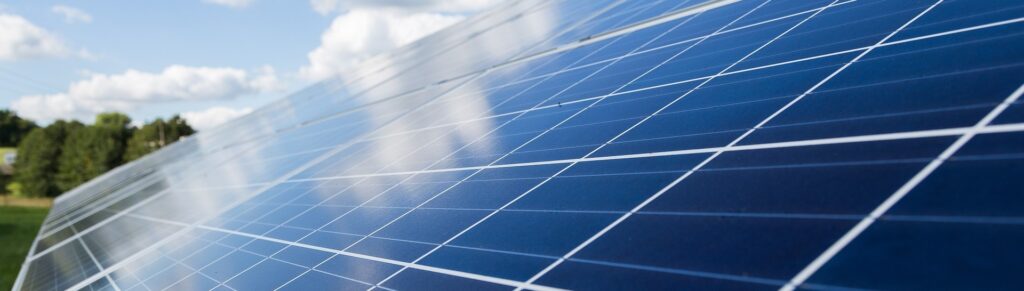
On first consideration, rooftop solar panels and UK weather may not seem like a natural pairing. The British Isles are not known for great amounts of sun. In the present climate of rapidly rising energy costs which show no signs of slowing, it makes good sense to look into future proofing your home or your property investments, with alternate solutions. This is true even here in the UK, where solar panels will still generate power even on days with little sun. In this article we will look into the benefits and the cost of adding Solar Power Energy to your home or business premises.
Solar energy, is it worth it ?
In an April 2023 article, Martin Lewis estimated that solar panels will cost an average of £5,500. So is it worth it ?
Solar panels have come down in price in recent years, up to 80% in the last decade. They are now also easier to install, and are built to work effectively, even in British weather. The number of installations in the UK increases year after year, and the UK is now one of the top 12 countries using solar capacity.
The cost of adding Solar Power Energy and the benefits to you
The ultimate benefits to you, is that solar power is much cheaper than grid electricity. Comparing the prices of your electricity per kilowatt hour, you can expect to save up to £465 less for an average household. Your electricity costs are also fixed at a lower rate, which provides a hedge against rising prices.
You may think about this as paying for 20 years of electricity at once, with a deep deep discount. You do need to pay cash up front, but your investment will more than pay for itself in the long run.
There is also the option of receiving payments for any excess energy you generate, and this will vary depending on the provider that you use.
Installation costs, although better than they used to be, are still fairly high, but there is help. Some of the Solar panel incentives in the UK at the time of this writing (2023) include;
The EC04 Energy Company Obligation Scheme which includes a £4 Billion budget allocated for the years 2022 – 2026, a Smart Export Guarantee, and a reduction in VAT deductions, at least until 2027. These are worth looking into, if you are considering making the switch.
Installing Solar panels using the latest technology, and best quality materials, will also increase the value of your property. In a recent article, Solar Energy Uk published a report which stated that a typical home with solar panels could increase its value by at least £2,000.
Solar power is a great long term investment, certainly in the long run. The benefits are clear, switching and utilising available grants and incentives will reflect in the reduction in your energy bills. In the UK, you will save up to £60,000 over the lifetime of your panels, which is around 25 years.
From a green perspective, using solar power can reduce the amount of other energy used, such as gas. The use of Solar power will reduce issues with air pollution, which is better for the planet and helps with issues related to climate change.
Solar Panel planning and installation
At PJW Meters we have decades of experience in energy management. We provide you, our customers with a single point of contact of Solar power system design and Installation.
We are also dedicated to looking after our planet as much as we can, and accordingly, we supply full spectrum solutions to your solar power needs.
As distribution partners to some of the market’s best solar technologies, systems and installation components , we have access to a wide range of products and brands for your solar power and renewables requirements.
These include
- Solar Panels
- ESS (Energy Storage Systems)/Battery Storage
- Solar Panel/PV Panel Mounting Systems
- Inverters
- Immersion Controllers
- Heat Pumps
- Meters
Get in touch with one of our friendly and knowledgeable installment professionals, and let us manage your project from start to finish
Electrical Metering and Harmonics
PJW Electrical Metering and Harmonics

With the increasing distribution and use of smart metering for domestic and commercial usage, power quality monitoring is gaining in importance. Understanding how Electrical Metering and Harmonics affects your home or commercial investments is a vital part of getting the best use of your utility metering systems.
Harmonic analysis for current and voltage signals allows energy meters to identify key power quality indicators in your meters, helping to prevent excessive harmonic currents which can lead to issues such as overheating of electrical conductors and resulting in shorter lifespans or damage to equipment. It can also be the cause of incorrect meter readings and increased energy costs.
In order to better understand harmonics in electrical systems, it is helpful to look at the electrical frequencies which may get disrupted in certain circumstances or conditions.
Frequency
Electric currents are produced by the oscillation of the alternating current which we call (AC) This means it is alternating between positive and negative voltage.
This oscillation is referred to as electrical frequency. An alternating current which oscillates 50 times a second (as it does in the UK is said to have a frequency of 50 hertz (50hz).
A sine wave can be described as a symmetrical, repeating, oscillating or alternating current or voltage within a wire. The number of times the sine wave goes through a complete cycle in the space of 1 second is called the frequency. Each cycle is called a period, hence the term ‘periodic wave’
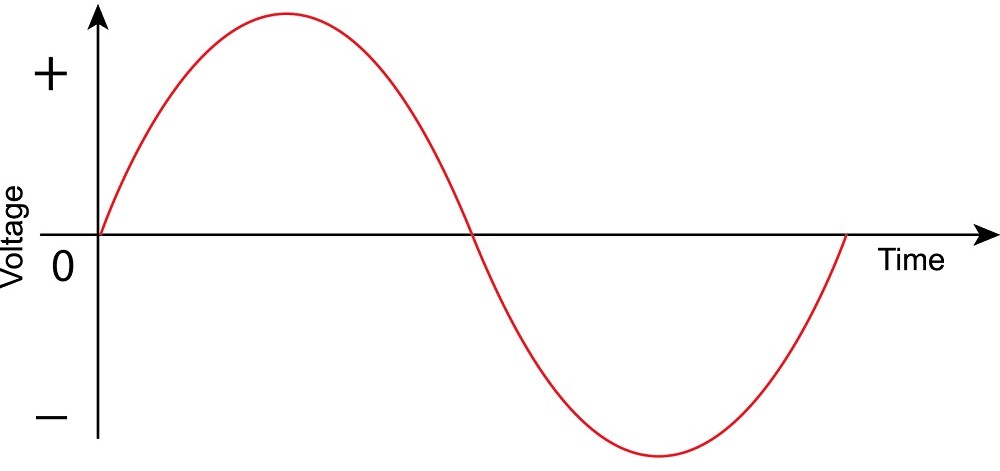
Periodic waves are found in a wide range of natural and man made phenomena, including the waves of the ocean, musical instruments, sound and light.
Electricity transmitted over the public power grid can also be graphed as periodic waves, and these can be subject to numerous influences that have an effect on the ‘clean’ symmetrical patterns of them.
Harmonics
Harmonics can be described as disturbances which repeat in cycles, for a significant and disruptive number of cycles. They are essentially distortions of an electrical power system, and affect the quality of power output. .
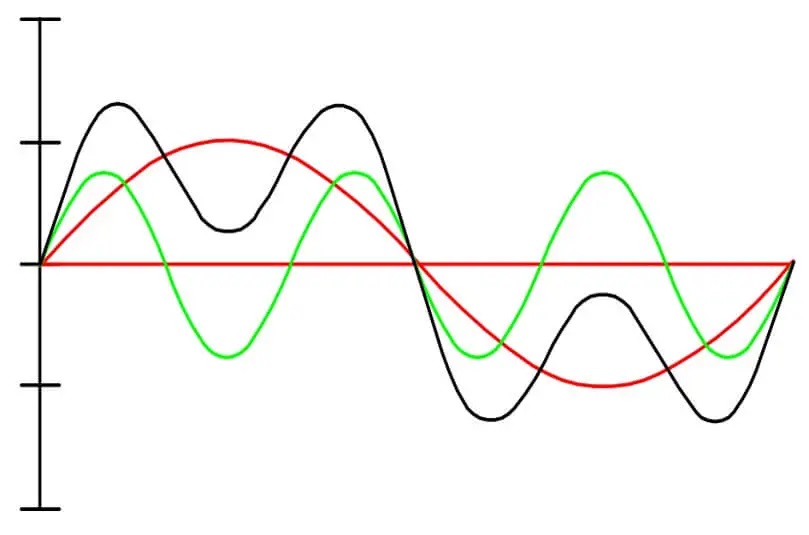
If the fundamental frequency is 50 Hz, as described above, the frequencies of the first three higher harmonics will be 100 Hz (2nd harmonic), 150 Hz (3rd harmonic), 200 Hz (4th harmonic) and any addition of waves with these frequencies is periodic at 50 Hz.
This is because a harmonic is a wave with a frequency that is a positive ‘integer multiple’ of a fundamental frequency, which is a frequency of the original periodic signal. This may be a sinusoidal wave for example.
Harmonics are not dips, or swells in currents, transient voltages, or frequency variations.
These are all non-periodic kinds of power quality issues. Harmonics are always periodic, which means that they occur at a given interval.
This image illustrates harmonics in a fundamental sine wave (shown here in red). The harmonic wave (shown in green) acts to disrupt the original wave, and creates a new distorted wave shown in black. Additional harmonic waves will result in further variation and distortion in this wave form.
The presence of this combination in totality is referred to as Total Harmonic Distortion or THD. There is a mathematical formula for calculating this, illustrated here.
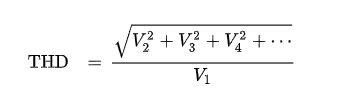
The presence of harmonics in an electrical system is caused by non-linear loads, and indicates distortion of the voltage or current waveform (frequency) and this implies such a distribution of the electrical power could result in the malfunctioning of the equipment and protective devices, infrastructural problems, and generate system losses. They can result in metering errors and disputes.
Causes of harmonics in electrical systems
Harmonics are generated by the addition of non linear loads, for examply by an AC-DC switching of power supply. They may be caused by environmental causes such as lightning, electromagnetic interference and others. This may result in the original AC circuit being affected by a significant percentage of THD, delivered into a power supply. Therefore, the higher the THD, the more distorted the original AC power wave form.
It is possible for THD to be greater than 100%, meaning that the signal has more harmonic energy than fundamental energy, resulting in damage to infrastructure or and equipment in the worst scenarios. More commonly, harmonic distortion can produce system underperformance, shortened hardware life, wasted energy, and increased electrical costs to users and providers or equipment.
Harmonics & Metering Accuracy
Mechanical meters will not register harmonics well with up to 80% likelihood of error at higher harmonic distortions. Solid state meters are much better at measuring harmonics, depending on the sampling rate and VAR calculation used.
PJW Electronic Meters work by calculating instantaneous power at short sampling intervals.
They multiply instantaneous voltage by instantaneous current. The result is integrated to calculate average power. If the voltage waveform is sinusoidal, no real power is transmitted and the result of the calculation is the fundamental power. If the voltage waveform is distorted, there is real power transmitted at both the fundamental and the harmonic frequencies and that is correctly included in the calculation.
Modern test instruments such as those designed and supplied at PJW Metering, are built to perform automatic calculations of Total Harmonic Distortion. The power quality analysers, loggers, and meters which we supply to our customers incorporate the most recent measurement technology, to provide fast and accurate analysis and readings, some up to the 50th harmonic. The data collected can help you to monitor harmonics within your systems efficiently and accurately, as well as measuring other power quality parameters that can degrade power quality.
The resulting benefits to you when using PJW Metering and analytical systems is precision readings, safety, reliability, ultimately saving you money and facilitating optimal conditions for all hardware systems running on original power supplies.